Militarization Ramped up in Honduras

April 1, 2013

On February 8, 2013, the Honduran government announced that it would be sending its military to patrol the streets of its two largest cities: San Pedro Sula and Tegucigalpa, the capital.1 With a murder rate of 92 per 100,000, Honduras far exceeds its nearest competitor (El Salvador, with a rate of 66 per 100,000) as the most violent country on the planet.2 In Tegucigalpa, the front pages of local, daily newspapers bearing gruesome photos of corpses riddled with bullet holes are blown up and pasted on the walls around town providing a disturbing display of the brutal violence.

President Porfirio Lobo has been lashing out at the press for Honduras’s violent reputation,3 specifically in the wake of surveillance footage released by one of Honduras’s main newspapers that depicts the execution of two brothers, aged 18 and 20. In the video, taken at 9 pm in the Comayagüela section of Tegucigalpa, the brothers are seen walking home as part of a group of five when eight armed men in bullet-proof vests emerge from two vehicles and open fire. Three of the youths ran for their lives, but the two brothers could not get away and, after being placed face down on the pavement, were shot in the back of their heads at close range.4

Just over a week after troops were deployed, on February 17, the son of the former Director of the National Police was gunned down in a restaurant along with his three armed body guards at 8:30 p.m. on a Sunday evening in the south of Tegucigalpa.5 His father has since accused the current Director of the National Police, Juan Carlos Bonilla, of being responsible for the murder.6 Bonilla also faces accusations regarding alleged ties to death squad activity,7 for which units under his control are ineligible to receive US aid under the Leahy Law. However, a recent Associated Press report reveals that under Honduran law, as Director of the National Police, all police units in Honduras fall under his control. Members of U.S. Congress are now asking the State Department to explain what appears to be a violation of the Leahy Law. 8 Assistant Secretary of State William Brownfield maintains that no money goes to Bonilla or those directly below him in order to maintain “two degrees of separation”.9

According to the Associated Press, the government is on the brink of bankruptcy: due to lack of government funds, teachers haven’t been paid in months, surveillance cameras in the capital have been turned off, stolen manhole covers aren’t being replaced, and even many soldiers have now gone months without being paid.10 Add to the mix last year’s failed depuration of the national police11 and December’s “technical coup” against the judiciary,12 and you begin to get the picture of a country that doesn’t just have a few problems, but rather is in the midst of a serious crisis. Hence, the government’s solution: put soldiers on the streets.

Deploying soldiers to patrol the streets is not without precedent in this country that less than four years ago suffered a military coup, bringing to an end less than thirty years of civilian rule. Thousands of soldiers have been deployed in the Aguán region of the Colón department since at least April of 2010 when 7,000 soldiers were dispatched to the area under Operation Trueno, which was then replaced by Operation Tumbador, and then Xatruch Task Force, currently in its third incarnation.13

In November 2011, the Honduran Congress altered the constitution to allow the military to fulfill police functions, and within a few short months, the military could be found in city streets, on inter-city buses, and performing a wide range of anti-narcotics and police operations.14 Since then, the order giving the military these police powers has been re-approved three times.15 It is merely, then, the latest incarnation which places some 1,200 soldiers on the streets of the country’s two most important cities.

The United Nations Special Rapporteur on the Freedom of Opinion and Expression recommended that the armed forces not assume police functions.16 The military checkpoints instituted previously in the Honduran capital faced strong criticism last year after soldiers chased down and killed a 15 year old boy, Ebed Yanes.17 The Special Forces unit responsible for the murder had been trained by the U.S. and even vetted as free of corruption and involvement in human rights violations. Lieutenant Coronel Reynel Funes, a graduate of the infamous School of the Americas, has been accused of covering up the murder, ordering his subordinates to lie about what had happened, remove evidence from the scene, and exchange their weapons. One of the soldiers involved is now a protected witness.18

The new troops, recently deployed, are not merely patrolling the streets, but also performing certain “operations”. To give a few examples of what these operations look like, the other day, as I was walking along the only pedestrian thoroughfare in Tegucigalpa, I witnessed a group of six or seven soldiers randomly selecting men to search and had placed about ten men against the wall with their legs spread; soldiers entered a high school and cut male students’ hair;19 and an image of a city bus stopped with a row of about thirty people all face down on the pavement in front of a handful of soldiers and police, has been making the rounds on social media. Image

At the same time as the military presence is being ramped up throughout the country, the commander of the Xatruch III Task Force recently called a press conference to denounce human rights defenders, accusing them of launching a “disinformation campaign” against the armed forces.20 Human rights organizations widely condemned his statements, calling them an attempt to silence concerns regarding militarization,21 making Honduras less secure,22 and in fact of committing human rights violations themselves.23

The situation is only expected to grow more tense leading up to national elections in November.

18Ibid.

Honduran Civil Society on the Move

March 24, 2013

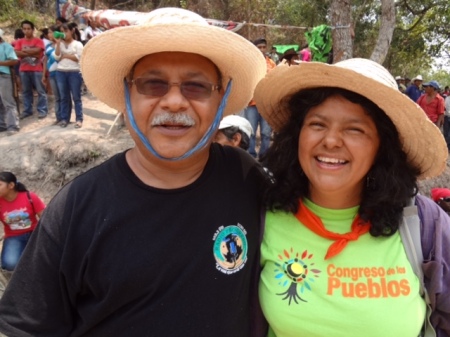
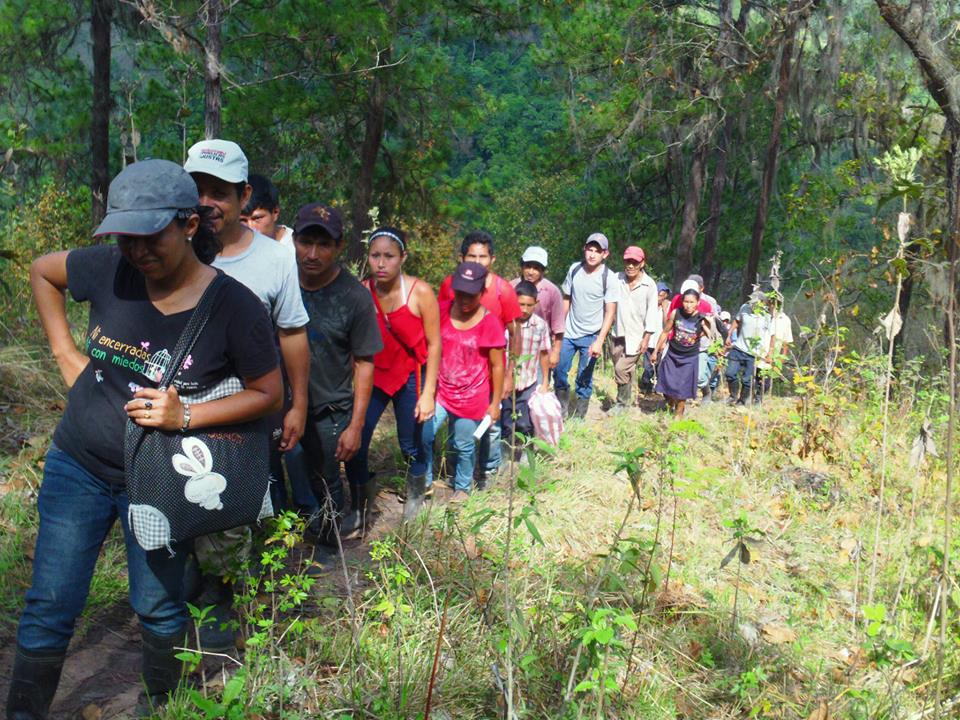
On March 6 the “March for Dignity and Sovereignty, Step by Step” reached the Honduran capital after a journey of 130 miles.  PROAH accompanied social movement organizations on the way to Tegucigalpa where approximately 300 exhausted but highly determined participants occupied the plaza in front of the Honduran National Congress. Their arrival represented the end of a ten day march that began on February 28, 2013 in different regions of the country. The great “guancasco”[1] between groups from the north and center of the country took place on March 2 in Siguatepeque, about 70 miles from the capital.

 caminata

The collective demands: Dignity and Sovereignty

Day after day, step by step, Honduran citizens walked under the banner of their demands in an effort to make their voices heard by Honduran members of Congress.  Among their demands are three major priorities[2]: the abolishment of the New Mining Act[3] as well as the “Charter Cities” Act[4], both approved by Congress on January 23.  Additionally they demand freedom for political prisoner José Isabel “Chavelo” Morales.[5] These three demands reflect the growing unease on the part of civil society regarding the exploitation of natural resources, the violation of national sovereignty and the repression against peasant movements. The reason for organizing a march as a means of protest is explained as reflective of the great desire on the part of civil society to promote their visibility while emphasizing important values including effort and humility.

The participants

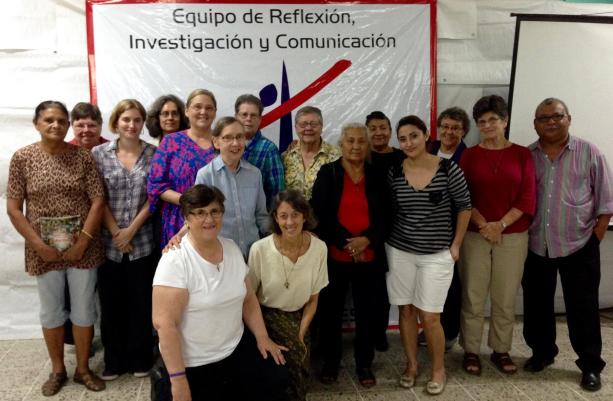
Social movement organizations taking part in this national effort include the Civic Council of Popular and Indigenous Organizations of Honduras (COPINH), the Fraternal Black Organization of Honduras (OFRANEH), the Broad Movement for Dignity and Justice (MADJ), the Unified Peasant Movement of the Aguán (MUCA), the Honduran Women’s Collective (CODEMUH), the National Center of Fieldworkers (CNTC), the Committee of the Families of the Detained and Disappeared in Honduras. (COFADEH), the Reflection, Investigation and Communication team of the Jesuits in Honduras (ERIC) and the Inter-Municipal Association of Development and Social Vigilance of Honduras (AIDEVISH).  Emblematic leaders of the resistance also participated including Padre Fausto Milla, who didn’t let his advanced age deter him. Padre Melo (ERIC’s director), who is also a daily host on Radio Progreso (part of ERIC as well), took part in the march and opened a space for free expression to the participants in a live broadcast. Numerous other Medias covered the march as well.

img_9941

 Under the banner of sharing and conviviality

International observers were present during the journey and witnesses to this human and social experience that provided lessons in conviviality for all.  Participants from different organizations with  indigenous Lenca,  Afro-Caribbean Garífuna or mestizo background, women, men and children, from the countryside and the city, shared food and shelter day after day, night after night. While the march was mostly contemplative and silent[6], evenings were often filled with cultural activities. Fatique, tensions, muscular pains and heat-induced migraines resulting from the miles-long daily march, was displaced by a game of soccer, a dance session or a concert by Garífuna participants. The evenings offered participants opportunities to discuss local problems and reflect on their lives. As a result members of the different organizations learned from the variety of social movements inside Honduras. When fatigue seemed to take over body and mind on various occasions, the leaders of the organizations found comforting words or emphasized the importance of their struggle.  Emotions culminated on the eve before arriving in Tegucigalpa, when news of President Hugo Chavez’ death was made public.  As elsewhere in Latin America, an improvised wake was organized for the participants to unite in a moment of grief and recognition.

A political significance

At the end of the march participants held a vigil in the plaza front of the national congress for 24 hours, waiting to be received by members of Congress.  An objective of the march was to open a space for discussion with the members of Congress who approved the new laws. The next day, after a chilly but animated night in a makeshift camp on the same plaza, a delegation of the participating organizations was received by the members of Congress. [7] The demands for dignity and sovereignty for the Honduran people were expressed but delegates left the Congress disillusioned lamenting the absence of political will.

At the same time, just miles away, a four person delegation including representatives of the international community, met with the President of the Criminal Court of the Honduran Supreme Court. During this occasion Chavelo’s supporters and his brother were able to bring forward their concern regarding the backlog of his case. As a result the President advanced considerably the date of the appeal regarding Chavelo’s sentence and announced that it would take place in the first week of April 2013 – instead of January 2014.[8]

A march for more social justice

Heading back home to their respective communities, participants had a hard time saying goodbye after having passed so much time together but concluded this social endeavor with optimism and commitments to strengthen coordination between movements.  There was some success regarding the case of José Isabel “Chavelo” Morales.  Nevertheless, the need to continue this collective effort was emphasized as the New Mining Act and the “Charter Cities” Act are still in place and represent a daunting future for the indigenous communities as well as for the environment. This march was a further step towards social justice and the leaders of the social movements announced forthcoming actions to assure that the struggle for justice lives on.

For more information please consult the following Spanish articles:

1) http://conexihon.info/site/noticia/derechos-humanos/derechos-humanos-ddhh/caminata-paso-paso-cumple-con-m%C3%A1s-de-200-kil%C3%B3metros

2) http://www.defensoresenlinea.com/cms/index.php?option=com_content&view=article&id=2474:avanza-paso-a-paso-la-caminata-por-la-dignidad-y-la-soberania&catid=58:amb&Itemid=181

3) http://voselsoberano.com/index.php?option=com_content&view=article&id=14816:avanza-paso-a-paso-la-caminata-por-la-dignidad-y-la-soberania&catid=1:noticias-generales

4) http://movimientos.org/es/content/honduras-llega-tegucigalpa-caminata-por-la-dignidad-y-la-soberan%C3%ADa

5) http://www.latribuna.hn/2013/03/06/termina-marcha-campesina-en-honduras-contra-mineria-y-ciudades-modelo/


[1]El guancasco“ is a tipical dance of the Lenca. “Los Guancascos” are meetings between different villages.

[2] There are seven demands in total: http://copinh.org/article/declaracion-caminata-por-la-dignidad-y-soberania-p/

[3] The new mining act is rejected by many civil society organizations. In addition to environment impact, there are also problems regarding national sovereignty and low tax regimes. Additionally there are no measures put forward in case of environmental violation by the companies.
For more information in Spanish: http://www.noalamina.org/mineria-latinoamerica/mineria-honduras/blog
Please also see our own articles regarding this topic.

[4] “Charter Cities“ or  “Special Development Zones” are enclaves inside the Honduran nation state with their own judicial system, tax regime and in general almost complete independence. Their implementation would displace a great number of people, mostly Afro/indigenous communities.
For more information in Spanish: http://www.litci.org/inicio/newspaises/honduras/3697-zonas-de-empleo-y-desarrollo-economico-io-zonas-de-saqueo

[5] “Chavelo” is a peasant farmer and member of the “Movimiento de Campesinos de Aguán” (MCA). He has been innocently incarcerated for nearly 5 years for homicide on the base of unsubstantiated proof and testimonies. He has appealed his 20 year prison sentence however it is still unknown if there will be a retrial.

A summary in English can be found here: http://www.counterpunch.org/2013/01/22/the-framing-of-chavelo-morales/

[6] On many occasion during the march total silence was requested by the leaders, most importantly for the arrival in Tegucigalpa. There are several reasons for this. On the one hand silence stands in opposition to “political noise”, i.e. the silence stressed the politically independent aspect of the march and desire not to be exploited by any political party for the coming election in November. On the other hand organizers stressed the need for the personal introspection that the silence enabled all participants to have a deeper connection with the root motivations of all people involved in the social movement.
See the following article in Spanish: http://www.defensoresenlinea.com/cms/index.php?view=article&catid=42%3Aseg-y-jus&id=2479%3Acaminata-por-la-dignidad-y-la-soberania-arribara-en-completo-silencio-a-la-capital&tmpl=component&print=1&page=&option=com_content&Itemid=159

[7] http://www.laprensa.hn/Secciones-Principales/Honduras/Tegucigalpa/Honduras-Aprueban-Ciudades-Modelo-en-el-Congreso-Nacional#.UUxylhkls7A

[8] The appeal took place on April 9 and the judges now have 5-20 days to decided on the matter

17 Siria Valley environmentalists free of charges, but their fight continues

February 22, 2013

On February 20, PROAH accompanied COFADEH’s lawyers and the Committee of Environmentalists of Siria Valley. That morning 17 environmentalists from the Siria Valley filed into the 5th courtroom of the Honduran Supreme Court of Justice accused of impeding a private deforestation project in their area. The delegation was so large that they couldn’t all fit in the courtroom’s allotted space for defendants. The case is now two years old (link in Spanish). PROAH has reported on the case and accompanied the Committee during that time. On April 7, 2010 approximately 500 community members gathered to protest and defend the trees that protect a watershed in their area that supplies the surrounding communities. Of the hundreds of protesters, 17 were accused of impeding a deforestation plan that the Committee of Environmentalists of the Siria Valley has denounced as illegal due to issues surrounding land tenure. At the end of 2009 they had filed a grievance with the Public Prosecutor’s Office, and to this date have received no response.

Before the hearing a letter from international organizations addressed to Honduran authorities and the Canadian ambassador was circulated. The letter expressed “worry for the criminalization of the defense of the environment and human rights in Honduras” and support for the 17 environmentalists. The letter also quoted a Siria Valley community member: “How is it possible that the public prosecutor for the environment can accuse environmental defenders whose only objective is the defense of life and the protection of water?” (This public prosecutor is specifically responsible for prosecuting cases that have to do with the environment.)

The defense was able to prove 5 of the defendants were not even present at the protest on April 7, 2010. The defendants were represented by Kenia Oliva and Karol Cardenas of COFADEH (Comité de Familiares de los Detenidos y Desaparecidos de Honduras). In his testimony, Carlos Amador (General Secretary of the Committee of Environmentalists of Siria Valley) expressed that the case was purely a criminalization of environmental defenders. On Monday, February 25 the presiding judge Mario Díaz read the resolution of the case absolving the accused of all responsibility and leaving them free of all charges (link in Spanish). One of the defendants, Reynaldo Guerra, a former mayor in the Siria Valley region, expressed the Committee’s contentment with the decision and said “we continue to be committed to the protection of the environment, as much mining exploitation as deforestation.”

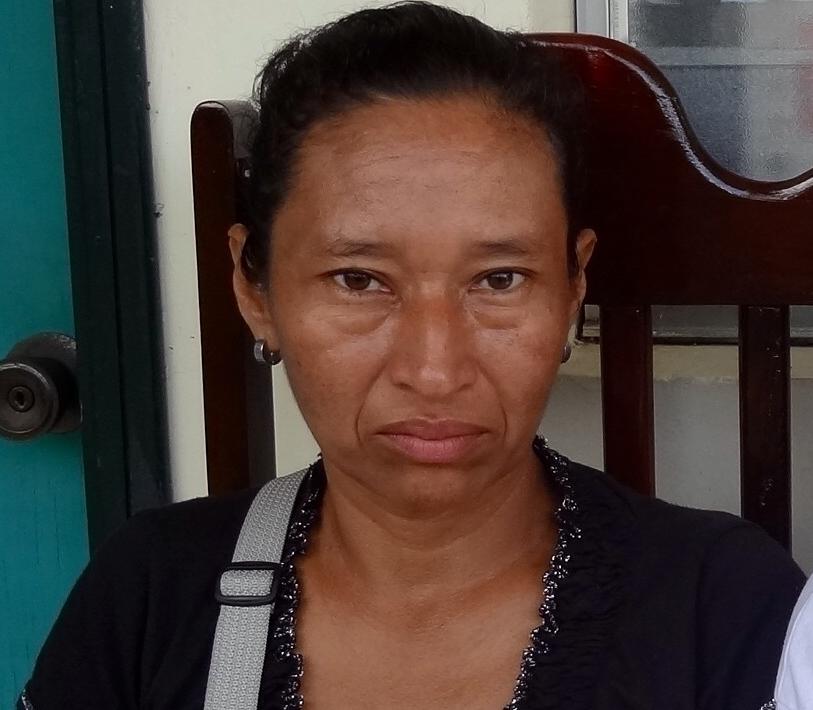
Carlos Amador, General Secretary of the Environmental Committee of Siria Valley; photo from the Committee's Facebook page.

Carlos Amador, General Secretary of the Environmental Committee of Siria Valley; photo from the Committee’s Facebook page.

A battle was won on February 20, but their fight continues. Carlos commented that it is just a momentary step and that “there are more difficult things coming for environmentalists.” The long-disputed mining law that passed recently in the Honduran Congress presents a whole host of new challenges for environmentalists across the country. Specifically in the Siria Valley Five Star Mining (owned by Gold Lake)  has set its sights on the region to exploit iron, according to Carlos. The company already has a presence in Monte Redondo in northern Honduras. “It’s a double threat with the approval of the new law. Siria Valley is going to become a place for a lot of new businesses to come exploit gold,” said Carlos. He is sure that this will not be the last attempt to delegitimize environmental activism, adding, “Companies will look for any other mechanism to continue criminalizing environmental defenders.”

COFADEH celebrates 30th anniversary; symbolically presenting 4 cases before the ICC

December 21, 2012

4 EMBLEMATIC CASES

Just two weeks after celebrating its 30th anniversary the Committee of Relatives of the Detained and Disappeared in Honduras (COFADEH) announced (link in Spanish) their intention to present four cases of human rights violations before the International Criminal Court  (ICC). According to a December 14th press release these cases are emblematic of the impunity of human rights offenders in Honduras as well as of the influence of United States hegemonic hemispheric security policy.

Ebed Yanes's father (link in Spanish). The 15-year-old was killed by the Honduran military. The case is one of 4 to be presented to the ICC.

Ebed Yanes‘s father (link in Spanish). The 15-year-old was killed by the Honduran military. The case is one of 4 to be presented to the ICC.

The four emblematic cases COFADEH will present to the ICC are symptomatic of a system of impunity in which the U.S. government has a heavy hand. Each of the cases point to U.S. involvement in rights violations and impunity for the perpetrators. In the Ahuás case, the role of U.S. DEA agents in the May 2012 massacre of indigenous villagers is addressed. Preliminary conclusions released in annex to COFADEH’s press release on December 14 state, “In the Ahuás case evidence threw light on direct intervention of U.S. agents in favor of the killers and in the interruption of criminal process.” They also highlighted the militarization of the country as a direct result of U.S. influence and a direct cause of human rights abuses in Honduras.

HISTORIC MEMORY

COFADEH is recognized as one of the foremost authorities on human rights in Honduras. Founded in the 1980s in response to the massive detentions and disappearances of that decade, the organization has grown from a small group of women demanding justice for their loved ones into a leading organizational force in the field of human rights. Members of COFADEH are regularly threatened for their work. COFADEH as an organization has been granted protective measures by the Inter-American Human Rights Commission. Most recently, journalist Dina Meza reported threats she received on November 19, 2012. These follow threats made against her in April, which were denounced by international human rights organizations including Amnesty International.

COFADEH declared 2012, the year of their 30th anniversary, to be the “Year Against Impunity.” In commemoration, the organization raised a monument on August 30th, the International Day of the Disappeared, at the site of an unmarked grave exhumed in 1995 5 kilometers outside the city of Danlí. Days after the dedication, the monument was riddled with bullets and 50 days after its installation it was disappeared. COFADEH General Coordinator, Bertha Oliva denounced this attack on the memory of the disappeared at the organization’s 30th anniversary celebration.

First shots fired into COFADEH's monument to memory (photo credit COFADEH)

First shots fired into COFADEH’s monument to memory (photo credit COFADEH)

COFADEH celebrated its anniversary on November 30, 2012 with a discussion forum in the morning followed by a concert the same evening. The forum,  “Historic Memory and Impunity,” began with presentations by Lisa Sullivan (SOA Watch), Bertha Oliva (COFADEH), Ludivina Hernandez (COFADEH), and Oscar Aníbal Puerto (Honduran Institute for Rural Development, IHDER). During his address Mr. Puerto said, “We are celebrating the anniversary of the moral reserve of this country.” Lisa Sullivan underscored the role of the U.S. in Honduras and shared a symbolic story from her plane ride into Tegucigalpa when a Honduran man fainted and three North American doctors came to his aid. She noted that instead of stealing his wallet and his shoes in his defenseless state, they assisted the man and helped to revive him. “That’s how relations between our countries should be,” Sullivan said.  Bertha Oliva stressed the importance of memory to ensure that history does not repeat itself. COFADEH’s anniversary was also celebrated in London where COFADEH lawyer Kenia Oliva was visiting at the time.

Banner at COFADEH’s 30th anniversary celebration: "30 years of memory demanding justice"

Banner at COFADEH’s 30th anniversary celebration: “30 years of memory demanding justice”

The overwhelming message received from those present was one of gratitude.  COFADEH’s struggle will continue, according to journalist Marvin Palacio (link in Spanish), “with its memory, informing past and present acts, working for justice, communicating and articulating voices against forgetting.”

The Commission of Truth releases its report, “The Voice of Greatest Authority is that of the Victims”

October 22, 2012

From October 3-5, 2012, the Commission of Truth presented its report, “The Voice of Greatest Authority is that of the Victims,” about human rights violations in Honduras during and following the June 28, 2009 coup d’état. PROAH accompanied the Commissioners when they presented the report in Tegucigalpa, San Pedro Sula, and Tocoa.

The Commission of Truth was created in June 2010 with the objective of “clarifying the facts of the June 28, 2009 coup d’état to demand justice for the Honduran population affected by the coup d’état and to recommend the adoption of measures necessary to avoid the repetition of this type of event in the future.”i The Commission was created by human rights organizations as an alternative to the Honduran government’s Truth and Reconciliation Commission (CVR). According to Bertha Oliva, Coordinator of the Committee of Families of the Detained and Disappeared of Honduras, the CVR report, which was released in July 2011, “makes the victims invisible and gives a layer of protection to the assassins.” Restoring dignity to the victims was an important part of the mandate and focus of the alternative Commission of Truth.

The Commission of Truth is made up of well-known national and international human rights defenders. Six of the commissioners presented the report, including the President of the Commission, Sr. Elsie Monge, who also presided over the Truth Commission in her country of Ecuador. The two Honduran members of the Commission, writer Helen Umaña and Fr. Fausto Milla, known for his many years of work defending human rights in Honduras, were also present. Nobel Prize winner Adolfo Pérez Esquivel sent a representative on his behalf, Beverly Keene of Jubilee South. Two Commissioners shared their own experience of family members being disappeared or murdered: Mirna Perla, a former Supreme Court Justice in El Salvador who survived a massacre in 1975 and lost her husband in a political assassination in 1987, and Nora Cortiñas, whose son was Detained-Disappeared in Argentina in 1977, which motivated her to co-found the Mothers of the Plaza de Mayo Movement.

The Commission carried out extensive investigations to develop its report, receiving a large quantity of testimonies from victims and then carrying out a process to verify the facts and analyze the cases. In total, the Commission of Truth received “1,966 reports from citizens about human rights violations by state agents and armed civilian apparatuses protected by state institutions” between June 2009 and August 2011¨.ii Based on these reports, the Commission analyzed 5,418 human rights violations and categorized 87 forms of aggression.iii

At the first presentation of the report, on October 3 in Tegucigalpa, the Commissioners presented the report to victims of human rights violations, the families of murder victims, members of organizations and social movements, the press, and representatives of the Honduran government and several Embassies. Those who lost their lives in the struggle for justice following the coup d’état were remembered and made present in the memory of all those in attendance through a moving ceremony in which a large photo of each person was carried to the center of the auditorium as their names were read and the audience members responded presente.

The first copy of the report was presented to the parents of Isy Obed Murillo, who, at 19 years old, was the first casualty of the coup d’état. On July 5, 2009, he was shot in the head and killed when the military opened fire on a protest at the Toncontín airport, where President Manuel Zelaya was attempting to return to the Honduras.

At the presentation of the Commission’s report in Tocoa, a city in the Lower Aguan region of Honduras, the commissioners presented a copy of the report to the family of Gregorio Chavez, a small farmer who disappeared on July 2, 2012 and was found dead four days later on the property of businessman and palm oil producer Miguel Facussé. He is one of over 50 people related to or affiliated with campesino organizations in the Lower Aguan region that have been murdered since the coup.

In Tocoa, the commissioners and attendees also took a moment to remember Antonio Trejo, the lawyer for the MARCA campesino movement in the Aguan  who fought tirelessly in court to defend the right to land for campesinos. After receiving several death threats, he was murdered on September 22, 2012. After the presentation of the report, those in attendance also had the opportunity to share with the commissioners about the repression that campesinos and human rights defenders continue to face in the Lower Aguan region.

The Commission of Truth’s report identifies three patterns of human rights violations in the framework of the coup d’état: 1) repression of public protests, excessive use of force during repression by state security agents, and criminalization of public protest; 2) selective or directed repression to the detriment of persons considered by the de facto government to be destabilizing to the regime; and 3) institutional dysfunction according to the needs of the regime imposed by the coup d’état and to the detriment of the population.”iv

The first two patterns were clearly illustrated during the remembrances of those who had been murdered, kidnapped, and abused during protests or for being journalists or leaders in the movement against the coup. To illustrate the third pattern of institutional dysfunction, particularly the “dysfunction in the justice system,”v  the commissioners presented the report in San Pedro Sula to Judge Luis Alonso Chevez de la Rocha of the Association of Judges for Democracy, who is one of the judges removed from office for opposing the coup d’état. The Commission of Truth’s report notes that they received “information about the removal, arbitrary transfers and dismissals, and the subjection to disciplinary hearings of an important number of judges who expressed their rejection of the coup d’état.”vi The commissioners noted that the right to a fair trial requires independent and impartial judges and that the ability of judges to be independent is important in ensuring respect for human rights.

At each of the events, the commissioners shared the report’s 18 recommendations, which include recommendations to “investigate and sanction those intellectually and materially responsible for the coup d’état and the human rights violations that arose from the coup,” and “to remove the civilian and military officials involved in grave violations of fundamental rights, committed since the coup d’état, from their positions in the administration.”

The commissioners remarked that the effects of the coup d’état continue and that political persecutions are likely to intensify in the coming months as the elections near. Commissioner Fr. Fausto Milla added that now there is a “new Commission of Truth, which is the Honduran people, with the mission of demanding that the recommendations of the report be fulfilled.”

ii The Commission of Truth’s report, “La voz más autorizada es la de las víctimas,” Page 227

iii Ibíd, Page 228

iv Ibíd, Page 99

v Ibíd, Page 110

vi Ibíd, Page 213

For more information:

The Commission of Truth report (in spanish)

“The Voice of the Victims.” 10-minute video about the Commission of Truth (in spanish)

The Garifuna People Defend Their Land in the Area of Future Model Cities

October 3, 2012


From August 27 to 30, PROAH accompanied OFRANEH (Fraternal Black Organization of Honduras) during its campaign in Vallecito (in the Department of Colón) in which OFRANEH demanded formal recognition of the boundaries of their land, which had been taken over upon by large landowners.

Expelled from their own land

Between Limón and Punta Piedra to the west of Trujillo there is an acute land conflict between the Garifuna community, organized in 6 Garifuna cooperatives, and businessman Miguel Facussé on the one hand and the family of rancher Reinaldo Villalobos on the other. In a 1997 court ruling, the Garifuna cooperatives received titles to 1600 hectares of land in this area.  This was confirmed by a 1999 Supreme Court of Justice ruling against Miguel Facussé, who had planted 100 hectares of African palma on this same piece of land. In the case of Villalobos, he illegally took possession of the majority of this Garifuna land.  Reinaldo Villalobos has since passed away but his family still has security guards patrolling this land and controls access to the beach.

Since 2005, a regime of terror has been unleashed in this corridor between Trujillo and the Mosquitia by people associated with organized crime.  Many families that lived in Vallecito have been expelled and economic activities have been reduced to a minimum.

For the Fraternal Black Organization of Honduras (OFRANEH), the struggle for this ancestral territory that has historically belonged to the Garifuna people is of utmost importance.  They consider it a territorial reserve for food security and the site of a future Garifuna University (1) . An OFRANEH video shows the steps they took to reliably establish the true boundaries of their land in order to assert their ownership of it.

In June 2010, they signed an agreement with representatives of the National Agrarian Institute (INA) to demarcate the boundaries of the terrain in Vallecito.  Nevertheless, those who had occupied this land refused entry to the employees of the INA and the Public Prosecutor’s Office (Ministerio Público), effectively preventing the agreed upon demarcation process. [2]

Two years without advances followed until July of this year when OFRANEH and 200 Garifuna representatives met with INA representatives in Corozol to demand demarcation of the land belonging to 15 Garifuna communities on the North Coast.  In her speech, Miriam Miranda, President of OFRANEH, denounced the government’s silent policy of expulsion through powerful industries and tourism programs that only serve to sell the Garifuna culture.  During this audience, Cesar Ham, Director of the INA, promised to demarcate those communities according to the existing titles and to provide the necessary measures (police, military) to be able to enter onto land that had been stolen.

A Camp to ensure the demarcation of the land

For OFRANEH, the boundary demarcation has real and symbolic importance.  According to Alfredo López, Vice President of OFRANEH, they organized more than 40 communities to take part in a camp to watch the re-measurement process. On Sunday, July 26, 6 busses with about 200 people – including many young people – arrived to demand their right to the land. [3]

The Honduras Accompaniment Project (PROAH) visited the camp to be present when the government representatives arrived.  Additionally, people from the United States, a group of German journalists, and several delegations also provided international presence in the camp.

The camp seemed like it could have been a restful place if it were not for Facussé and Villalobos’ guards and their intimidation of the Garifuna community: they interrupted the night with bursts of machine-gun fire, entered the camp heavily armed, and patrolled the area.  The night dances and drumbeats of the Garifuna community intermingled with fear and vulnerability.

On Tuesday, August 28, the third day of the camp, the INA technicians arrived and surveyed the boundaries of one of the six Garifuna cooperatives, accompanied by over 50 Garifuna men and women. After finishing, they affirmed that their work was very limited by the lack of protection from the authorities, which they needed to demarcate the rest of the land.  They pointed out that they needed the presence of the police, military, and Public Prosecutor’s Office in order to break the Villalobos’ gigantic gate that blocked access to the beach.

A contingent of the national police and Public Prosecutor’s office did arrive in the area the next day, but stayed in Tocoa, which is 80 kilometers from Vallecito. Via phone, radio, and communiqués, OFRANEH called for them to come to Vallecito in order to carry out the boundary demarcation and protect the camp members, who were constantly threatened by armed men who surrounded the camp.  Daily, the authorities justified their absence with a variety of reasons, including insufficient personnel, the need to wait for orders from “above,” and even a lack of gas to transport their personnel from Tocoa to Vallecito.  In this way, the first week of the camp ended without their presence.  OFRANEH concluded:

If there has not been any response from Pepe Lobo’s government up to this point, it is because he supports and endorses the theft of land by the groups who have taken control of the territory in the Vallecito area.[4]

Vallecito – Future Model City?

It is well known that Vallecito is in one of the three zones for future model cities in Honduras.  The model cities will be located in three Special Development Regions (RED), two in the north and one in the south of the country.  These are autonomous zones with their own government and laws to promote free trade and attract investment.  In the Vallecito area, there are multiple natural resources that are of economic interest: minerals, petroleum, beautiful beaches, and fertile land.

According to OFRANEH, there is an unresolved problem with the implementation of model cities: What to do with the inhabitants who own their land and are not willing to leave?  The government claims that the model cities will be in uninhabited areas but OFRANEH assumes there will be evictions because there are almost no uninhabited zones in the country.  In the case of Vallecito, where the inhabitants have legal titles to the land, OFRANEH suggests that the expulsion strategy could be the absence of the government, which leaves the inhabitants subject to the will of the powerful interests and their armed groups.

In response to the daily intimidation, OFRANEH constantly requested police protection for the camp members.  However, the police patrols stayed in Tocoa, saying that they lacked orders from higher-up, were awaiting reinforcements, or lacked gas.  OFRANEH denounced this as a policy of a “Failed State,” because it appeared the state was incapable of incapable of reacting in the face of organized crime:

“All day we have been waiting for answers from the government and there has not been a positive response by the police or military to come to the area in order for the re-measurement of the land that powerful groups have stolen from us to proceed. As a result, the night is closing in is with our worst fears confirmed.” [5]

Belated Response from the Government

Due to strong national and international pressure, OFRANEH was able to dialogue with the Lobo Administration.  During a meeting in Tegucigalpa, the government committed to designate protection for the Vallecito community and to establish the boundaries of the land that had been taken over. [6]

Shortly afterward, on September 13, the INA complied with its commitment from two years ago – accompanied by police and military entities and with an order from the Public Prosecutor’s Office — the Villalobos’ gate was broken and they succeeded in entering the land to begin demarcating its boundaries.

The process had not yet concluded when the threats by the Villalobos’ guards began.  They declared they would murder any Garifuna who came to Icotea, a neighboring town where the widow of Reinaldo Villalobos lives.

OFRANEH hopes the authorities issue an eviction order to return the land to the Garifuna cooperatives and guarantee the security of the community in Vallecito, who continue being harassed by powerful interests in the area.  OFRANEH stated that “any attack suffered by the Garifunas will be the responsibility of Reinaldo Villallobo y de Miguel Facussé’s thugs as well as the government.[7]


[1] “Piratas en Honduras: De Gregor Macgregor y la República de Poyas, a la Ciudad modelo de Paul Romer” OFRANEH. Julio 18, 2012.

[2] “Pueblo Garífuna reocupa tierras usurpadas en Vallecito”, Comunicado de OFRANEH del 27 de agosto del 2012, documento: doc decl.Ofraneh2.

[3] Amenazan con desalojar garífunas tras recuperación, Artículo del periódico digital conexihon del 29 de agosto del 2012, http://conexihon.info/noticia/derechos-humanos/pueblos-indigenas/amenazan-con-desalojar-gar%C3%ADfunas-tras-recuperaci%C3%B3n-de.

[4] Crisis en Vallecito (Colón): Aclaración pública ante infundios del INA, Comunicado de OFRANEH del 29 de agosto del 2012, http://ofraneh.wordpress.com/2012/08/29/crisis-en-vallecito-colon-aclaracion-publica-ante-infundios-del-ina/.

[5] “Honduras, sospechoso silencio del Gobierno de Pepe Lobo ante caso de Vallecito”, Comunicado de OFRANEH del 30 de agosto 2012, documento:sospechoso silencio.

[6] “Se reanuda el Proceso de Remedición de Tierras en Vallecito, Colón, Comunicado de OFRANEH del 5 de septiembre 2012, http://ofraneh.wordpress.com/2012/09/05/se-reanuda-el-proceso-de-remedicion-de-las-tierras-de-vallecito-colon/.

[7] “Se logró romper el Portón de la Verguenza en Vallecito!”, Comunicado de OFRANEH del 13 de septiembre 2012, documento:Portón de Verguenza.

APUVIMEH Calls for an End to Impunity for the Murders of Walter Tróchez and other members of the LGBTI community in Honduras

September 18, 2012

On September 13th, PROAH accompanied APUVIMEH (Association for a Better Life for Persons Infected and Affected by HIV/AIDS in Honduras) for a walk and demonstration organized to demand justice for the murders of Walter Tróchez and other members of the LGBTI community in Honduras. As José Antonio Zambrano, President of APUVIMEH, explains in the press release for the event:

Two years and 9 months ago today, our companion Walter Orlando Trochez, Secretary of APUVIMEH, a leader of the LGBTTI community, an HIV activist, and a human rights defender, was murdered. He was a young man whose feelings, aspirations, and right to life was cut short. He struggled side-by-side with his people, a people arbitrarily jailed, beaten, humiliated and ill-treated by members of the police and Army. Through his writings and accompaniment of the public protests following the 2009 coup d’état, Walter offered his life for justice and freedom. Because of this, we are committed to demanding justice and the prosecution of those responsible for his vile murder perpetrated on 13 December 2009, in the center of Tegucigalpa.”

Since 2011, APUVIMEH has held these demonstrations on the 13th of the month, the monthly anniversary of Walter Tróchez’s death. They gather at the statue of ‘Simón Bolívar the Liberator’ in Tegucigalpa and walk from there to the Attorney General’s office (Ministerio Público), where they demand an end to impunity in the murders of the LGBTI community and deliver a communiqué to the Special Prosecutor for Human Rights. As APUVIMEH explains in their August 13th press release:

Included in the promotion and respect for human rights is the right to life, a dream that has been ended violently for more than 80 members of the Honduran sexual diversity community. One emblematic case is that of our colleague, Walter Trochez… we are asking the investigative unit of the Special Prosecutor for Human Rights of the Attorney General’s office for a report on the investigation, its progress and obstacles.”

According to a report by La Red Cattrachasi, the period with the most violent deaths in the LGBTI community in recent years were the last six months of 2009, following the June 28, 2009 coup d’etat. During this time, 23 members of the LGBTI community, including Walter Tróchez, were killed. From 2010 until August 6, 2012, during the current Porfirio Lobo presidency, they report an additional 51 violent deaths in the Honduran LGBTI community.

On August 28, the Inter-American Commission on Human Rights (IACHR) condemned ] one of the most recent homicides in the LGBTI community, that of a 21-year old trans woman who was found dead in San Pedro Sula on August 2, 2012. The Commission’s press release explains her body “was found with a series of bullet wounds to her face and head. Also, her hands showed signs of being tied behind her back. According to the media, her relatives reported that four persons came to their house the day before, announcing they came as officers from the National Agency of Criminal Investigation (Dirección Nacional de Investigación Criminal), and took her, indicating she was arrested.”

The Inter-American Commission on Human Rights’ press release also speaks to the issue of impunity:

In addition, the Commission notes that very frequently, problems exist in the investigation of those crimes, which involve, in part, failures to open lines of investigation into whether the crime was committed by reason of the victim’s gender identity or sexual orientation. The ineffectiveness of the state response fosters high rates of impunity, which in turn lead to the chronic repetition of such crimes, leaving the victims and their families defenseless.”

It is in this context that the members of APUVIMEH took to the streets on September 13th, just as they had done on the 13th of the month before, to once again demand an end to impunity for murders in the LGBTI community.

i “Situación de las Muerte Violentas de la Comunidad LGTTBI en Honduras, resumen al 6 de agosto 2012.”

Press Conference about Health Impacts of San Martin mine and Honduras’ Proposed Mining Law

August 28, 2012

On August 1, 2012, members of the Siria Valley Environmental Committee (Comité Ambientalista del Valle de Siria) traveled to Tegucigalpa for a press conference about the health impacts of the San Martin mine. PROAH accompanies the Siria Valley Environmental Committee, whose members have been criminalized for their efforts to defend the environment, and was present for the press conference, held as part of the Continental Day of Action Against Canadian Mega Resource Extraction. It was led by Dr. Juan Almendares, a medical doctor who has worked extensively with communities affected by the mine in Honduras and the coordinator of the Movimiento Madre Tierra (Mother Earth Movement) of Honduras.


The San Martin mine, owned by Canadian mining company Goldcorp, operated in the Siria Valley from 2000 until 2008. Dr Almendares and community members report that the mine has left behind a legacy of health and environmental problems due to the mine’s contamination of the water in the area with heavy metals. According to Dr. Almendares, when the mine opened in 2000, only 8 out of every 100 people in the area had skin problems. Ten years later, after the operation of the mine, this figure has increased ten-fold, to 80 out of every 100 residents. High levels of heavy metals – lead, arsenic, and mercury – have been found in the blood of both children and adults in the Valley.

A recent photo report by Carlos Amador of the Siria Valley Environmental Committee documents the “serious endemic health crisis [that] continues to unfold” in the Siria Valley. The report includes testimony from community members, such as Juana Aceituno, who explains, “Look at how sick I am. I never had problems like this. It was when the mine came that I got sick. I have a lot of pain and I don’t know what to do about it. This Canadian mine came here and ruined everything.”

Last month, members of the Siria Valley Environmental Committee traveled to Guatemala for the People’s International Health Tribunal to testify about the health effects of the San Martin mine. The Tribunal heard testimony from people affected by Goldcorp mines in Mexico, Guatemala, and Honduras and in its verdict stated:

“All of the cases that have been presented have the common elements of: (a) contamination and the irreversible loss of water sources, (b) irreversible environmental devastation: disappearance of mountains, ecosystems and changes to the hydrologic cycle, (c) dust that is constantly inhaled and that contains heavy metals and toxic substances that include carcinogenic elements that accumulate in organisms, (d) effects in the chain of life: destruction of crops and soil, illness and death of wild and domestic animals. In the testimonies, we have heard people talk about skin and eye illnesses, hair loss, skin rashes, miscarriages, infertility, premature births, birth defects and death of newborns, joint pains, auditory damage, gastrointestinal problems, nervous system problems, cases of poisoning that have led to death….We heard from ex-workers of Goldcorp whose health has been affected because they suffer from frequent intoxication, leaks, toxic chemical explosions, and workplace accidents due to a lack of equipment and security measures. These accidents have also led to death.”

Pedro Landa, Coordinator of CEHPRODEC (Honduran Center for the Promotion of Community Development) and facilitator of the National Coalition of Environmental and Social Networks of Honduras (Coalición Nacional de Redes Ambientales y Sociales de Honduras) noted at the press conference that 70% of mines in Latin America are owned by Canadian companies or companies with headquarters in Canada and it is no coincidence that the Canadian government sent experts to ‘advise’ on the proposed mining law currently being considered by the Honduran Congress. In a recent article, Jennifer Moore of Mining Watch Canada examines the role of the Canadian government in the proposed mining law in Honduras and finds that “the Canadian government is spending taxpayer dollars to help set up a favourable legal framework for Canadian mining operations against the will of Honduran civil society.”

Numerous Honduran civil society organizations have rejected the proposed mining law that the Honduran Congress is currently considering. This proposed law would end the current moratorium on new mining concessions, paving the way for the 300 mining applications that were stalled by the moratorium to move forward. It allows for open-pit mining — which 91% of Hondurans oppose, according to a survey by the CESPAD (Center for Democracy Studies) and the World Lutheran Federation. The National Coalition of Environmental and Social Networks of Honduras released a statement about the recent ‘socialization’ process in which the Mining Commission of the National Congress and government agencies held briefing sessions about the proposed law. The Coalition notes, “In all these “briefing” sessions, the above-mentioned public officials have tried to deceive the population by telling a series of half-truths which, according to ethical principles and values, are complete lies.”

The first half-truth they cite is the claim that “the new law better protects natural resources,” noting that “the truth of the new law” is that “it makes it possible for buffer zones of protected areas to be subject to mining concessions, it fails to safeguard the human right to water for the population, … removes from municipalities their authority to designate zones as protected, … [and] relaxes the requirements for obtaining an environmental license.” Read the whole statement from the National Coalition of Environmental and Social Networks of Honduras here.

The tragedy in La Moskitia – COFADEH publishes the preliminary report of its fact-finding mission

June 20, 2012

From 20 to 24 May 2012, a commission organised by COFADEH (the Committee of the Families of the Detained and Disappeared in Honduras) visited La Ceiba and La Moskitia to document the tragic events of 11 May, when four passengers in a river boat were killed when they were shot from helicopters during a joint antinarcotics operation by the Honduran police and the US Drug Enforcement Administration (DEA).   During its mission, COFADEH received accompaniment by PROAH, including a representative from Witness for Peace.  COFADEH presented the preliminary report of this mission at a press conference on 6 June.

The passenger boat fired upon by helicopters. The bullet holes can be seen on its side.

There was – and there still is – an urgent need to clarify the facts surrounding the case, not only because of the seriousness of what occurred, but also because of the series of statements by the authorities, US and Honduran, justifying the attack by implying that the victims were involved in the drugs trade[1].  COFADEH’s mission managed to shed light on many of the key facts, as well as giving a face to the innocent victims, and a voice to their relatives and others affected by the attacks.

We travelled to Ahuas, the municipality in La Moskitia where the tragedy occurred, and home to most of the victims and their relatives.  Its name, which means ‘pine’ in the Tawahka language, has a particular resonance for those who remember the militarization of Honduras by the US during the 1980s – Ahuas Tara (‘Big Pine’) was the name of a series of major joint military operations between the US and Honduras in La Moskitia in the context of the Contra War over the border in Nicaragua.

The journey underlined the remoteness and isolation of the region.  We travelled in a small plane (about 20 seats) over the jungle of the western Mosquitia, and then in an even smaller plane (a 4-seater) flying low over the grasslands in the east of the region, which provide easy landing strips for drugs planes.

In a region where there is only one main road, air and water are the usual means of transport for the local people.  When we arrived, we were taken to the ‘landin’, the small river port in Paptalaya, a small community in Ahuas municipality, close to where the tragedy happened, and where the boat was due to dock before it was fired upon by four military helicopters at 2 am on 11 May.  The boat was still there, complete with 20 bullet holes in its sides.  One of the ‘factors’ which made its passengers suspicious in the eyes of US officials was  that they were travelling at night[2].   However, this is normal practice for long river journeys in a region where the strength of the sun during the day is fierce, and looking at the boat – a pipante, essentially a long canoe – it was easy to see that it was so narrow that putting a roof on it would have destabilized it.

The ‘landin’ at Paptalya where the passenger boat was due to dock, and where the helicopters landed.

Information  on the events leading up to the tragedy were provided by the local mayor, Lucio Vaquedano, who has been  praised by COFADEH for his bravery in publicly stating the facts surrounding the case[3], and in contradicting the versions of the Honduran and US authorities who, immediately after the tragedy, claimed that the dead were drug-traffickers.   In an interview with COFADEH, he stated that, according to accounts he had heard, a light aircraft had landed on an illegal runway 3 kilometres away to leave a drugs shipment, which was possibly already tailed by the police and the DEA. The cargo was taken to the dock at Paptalaya where it was transferred to a boat. The employees of the drugs traffickers fled when they realized they were being tracked, abandoning the boat which then drifted down the Patuca River.  The passenger boat, which was travelling upriver, was about 700 meters away from the landing at Paptalaya when it came across the boat carrying the drugs.  Just at that moment, the police and the DEA attacked, opening fire on the passenger boat.  For Mr Vaquedano, it was a mistake that unfortunately took the lives of four innocent people[4].

The dead were Hasked Brooks Wood, 14, a minor travelling with his mother Clara Wood Rivas, and  three adults, all of whom were parents, and two of whom were pregnant women –  Candelaria Pratt Nelson, 48, who was from Brus Laguna, on the coast, and the mother of 6 children, and Juana Jackson Ambrocio, 28, the mother of two young children, who lived in Ahuas.  The other adult, Emerson Martinez Henriquez, 21, was the father of two girls, and had left the army only a month earlier after three years of military service in the 5th Infantry Battalion in Mocorón, Gracias a Dios.

Typical houses in Ahuas.

Further details of the attack came from interviews with the boat’s survivors.  They insist that no warning was given before the helicopters fired upon them, and that no other shots were heard, although as late as 10 June the Honduran authorities were reported as claiming, on the basis of a preliminary investigation, that the agents on the helicopters were justified in firing in self-defence[5].

What is certain is that there was no attempt by the personnel in the helicopters to help the passengers once the attack took place.   Given that they included children who could not swim, it is a miracle that not more people died, as the passengers were forced to jump  in the river to escape the firing, which continued while they were in the water.  Three of the injured, from their hospital beds in La Ceiba and Ahuas, told COFADEH how, despite their injuries, they managed to swim to the river bank.  There, two of them, Wilmer Lucas Walter, 14, with a severe injury to his wrist and Lucio Adan Nelson Queen, 22, shot in the back and elbow, fled into the trees to save themselves when they saw that the attack was continuing.  The third hospitalised victim, the boat owner, Hilda Rosa Lezama Kenreth, 53,  was hit by a high-calibre bullet which left a  groove 4 inches wide and 12 inches long across her thighs.  She was in the river for over two hours, sheltering under a bush from the attack[6].  She was forced to spend so much time in the polluted water that she contracted an infection in the wounds, and at one point there was the risk that both legs would have to be amputated.

What she did not know at the time was that her son had been prevented from rescuing her by agents – reportedly both American and Honduran – from the helicopters, who spread terror among the community after landing at the dock at Paptalaya.   They detained him for an hour and beat him,  forcing him at gunpoint to recover the boat containing the drugs.  This was only one example of a series of reported abuses by the Honduran and American agents, who violently broke into houses, looted fuel, ill-treated the inhabitants and subjected some to death threats.  One of the survivors of the attack, Clara Wood Rivas, and the mother of one of the dead, Hasked Brooks Wood, 14, had arrived distraught at the landing, after swimming ashore, only to be threatened at gunpoint by three agents, who asked her if she wanted to die and told her to get out of the area[7].

This failure to help the passengers of the boat extended to the care of the wounded, both immediately after the incident as well as longer term – all help for the injured was arranged by the people of the community, with no support from the authorities.   In the end, Lucio and Wilmer spent over 20 days in hospital in La Ceiba without being operated on – in the case of Lucio, the operation was cancelled at the last minute a number of times, and it was finally carried out only after UNICEF and the International Committee of the Red Cross intervened at COFADEH’s request.  In the case of Wilmer, his mother, who is single and in a precarious financial position, had to find the money to pay for an ambulance to transport her son to San Pedro Sula for the surgery which would save his hand[8].

At the end of their mission, COFADEH initiated legal cases on the incident by lodging official complaints with the Public Prosecutor’s Offices in Puerto Lempira  and La Ceiba[9], as well as later at the Head Office (Ministerio Público) in Tegucigalpa, with the presence of the victims’ relatives.

In their preliminary public report, COFADEH are not only demanding due support for the victims and their relatives, but also that both the US and Honduran authorities conduct investigations into the incident, which has had such a bitter cost in innocent lives[10].


[4]COFADEH – Preliminary Investigation Report – The Ahuas Case – 11 May 2012 – footnote 4 (P.7). http://defensoresenlinea.com/cms/documentos/2012_INFORME_Casos_Mosquitia_ingles.pdf

[6] COFADEH – Preliminary Investigation Report – The Ahuas Case – 11 May 2012 – P.9 and 10. http://defensoresenlinea.com/cms/documentos/2012_INFORME_Casos_Mosquitia_ingles.pdf

[7] Ibid. P.10 and 12.

[10] COFADEH – Preliminary Investigation Report – The Ahuas Case – 11 May 2012 – P.14. http://defensoresenlinea.com/cms/documentos/2012_INFORME_Casos_Mosquitia_ingles.pdf

Strong response of the international community to death threats received by PROAH

May 23, 2012

The response of the international community to death threats received by the PROAH team was immediate, strong and is ongoing.  

We are grateful to U.S. and Canadian networks that issued urgent actions and Letters of Concern (see attached). European Union Ambassadors to Honduras spokeout publicly regarding the escalation of violence and threats against human rights defenders and international accompaniers. Amnesty International issued an Urgent Action on behalf of the PROAH team. It also issued a public letter to the government of Honduras, demanding that there be: “No more killings, attacks or threats against journalists and human rights defenders.” 

This week in Washington D.C, members of the Honduras Working Group, a subgroup of the Latin America Working Group (LAWG), including a representative of PROAH, had a series of Congressional visits to discuss the human rights crisis in Honduras and concerns about the role of U.S. policy in fueling the violence.

Congressman Farr made a statement in the House of Representatives expressing his alarm regarding the steady deterioration of human rights in Honduras. He mentioned the recent attacks on human rights defenders, including the threats received by the PROAH team.

5.2012 CCR Final Statement of Concern Hon HRD_ENG

5.2012 APG Letter threats PROAH


Follow

Get every new post delivered to your Inbox.